Every year on 1 August, Warsaw comes to a standstill.
At exactly 5.00 pm, the sound of air raid sirens echoes across the Polish capital. Cars stop in the middle of busy roads, buses and trams halt, cyclists dismount, and pedestrians pause in silence. For one minute, one of Europe's busiest cities becomes almost completely still.
Known as Godzina "W" or "W Hour", this annual act of remembrance commemorates the moment the Warsaw Uprising began in 1944. It has become one of Poland's most powerful public commemorations, bringing together veterans, residents, young people and visitors from around the world.
This year marks the 82nd anniversary of the Warsaw Uprising, with ceremonies, exhibitions, concerts, educational events and community gatherings taking place across Warsaw throughout the week. Organised by the Warsaw Rising Museum, the City of Warsaw and numerous public institutions, the programme honours those who fought and those who lost their lives during one of the defining events of the Second World War.
What Was the Warsaw Uprising?
The Warsaw Uprising began on 1 August 1944 at 5.00 pm, when the Polish underground resistance, known as the Home Army (Armia Krajowa), launched an operation to liberate Warsaw from German occupation before the arrival of Soviet forces.
After nearly five years of occupation, the objective was to restore Polish independence and demonstrate that the nation could reclaim its own capital.
The uprising was expected to last only a few days.
Instead, it continued for 63 days, becoming the largest military resistance operation carried out by any underground movement in occupied Europe during the Second World War.
Around 40,000 to 50,000 members of the Home Army took part, supported by thousands of civilians who acted as medics, couriers, engineers, cooks and volunteers. Many participants were teenagers, including members of the Grey Ranks (Szare Szeregi), the underground Polish Scouting Association.
Despite extraordinary determination, the insurgents faced overwhelming odds. German forces responded with brutal reprisals, carrying out mass executions and systematically destroying entire districts.
Following the surrender in October 1944, much of Warsaw was deliberately demolished.
Historians estimate that approximately 16,000 Polish fighters were killed, around 20,000 were wounded, and between 150,000 and 180,000 civilians lost their lives. Hundreds of thousands more were expelled from the city.
The destruction reshaped Warsaw forever, but it also cemented the uprising's place at the heart of Poland's national memory.
Why the Anniversary Matters Today
More than eight decades later, the Warsaw Uprising remains one of the most significant dates in Poland's calendar.
While historians continue to debate aspects of the military and political decisions surrounding the uprising, the anniversary itself focuses on remembering those who fought, those who died and the civilians whose lives were irrevocably changed.
For many families in Warsaw, the events of 1944 are not yet such a distant history. Stories, photographs and personal memories have been passed down through generations. The annual commemorations therefore combine official ceremonies with deeply personal acts of remembrance.
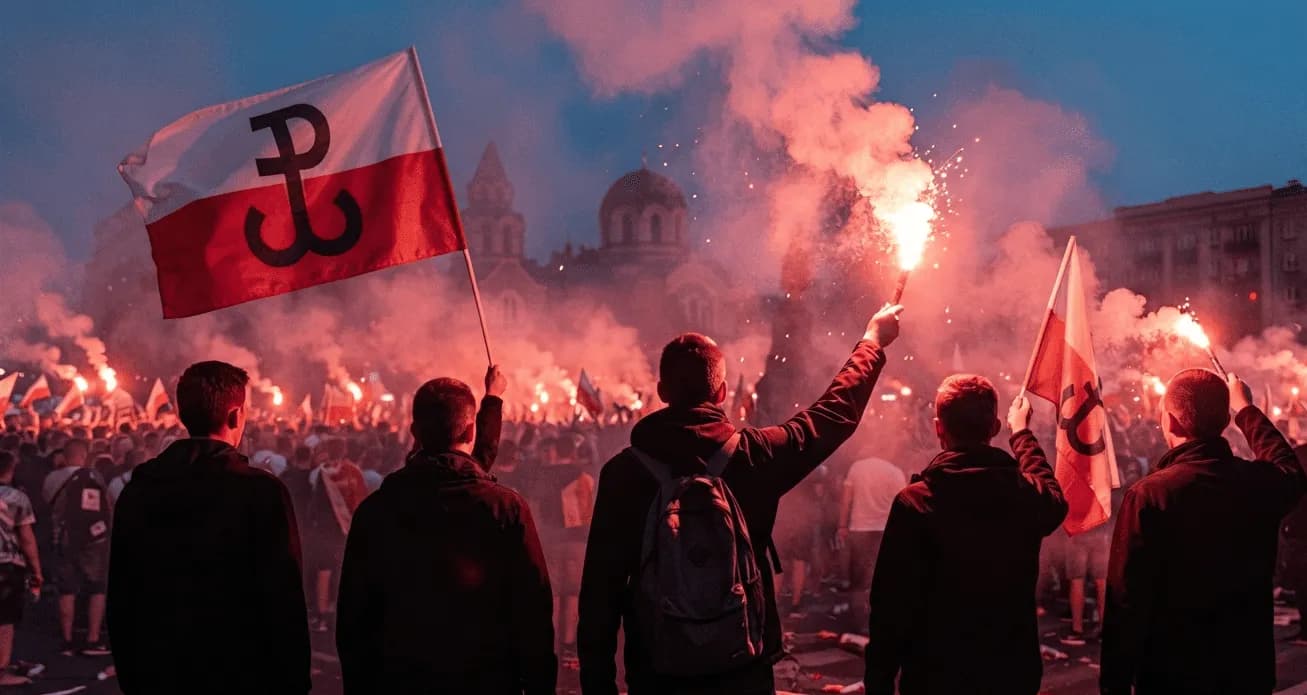
Many wear the red and white colours of the Polish flag or display the Kotwica, the emblem of the Polish Underground State, as a symbol of remembrance.
Understanding Godzina "W"
The best-known moment of the anniversary occurs every year at 5.00 P.M. on the 1st of August. This marks the exact time that the uprising began in 1944. When the sirens sound, much of Warsaw voluntarily stops.
Drivers leave their engines running but remain motionless.
Passengers stand quietly inside buses and trams.
Pedestrians stop walking.
Cyclists dismount.
People fall silent.
The pause lasts approximately one minute.
For first-time visitors, the experience can be profoundly moving.
Unlike many national commemorations, there is no central instruction requiring people to stop. Instead, participation has become a widely observed civic tradition that reflects the respect held for those who lived through the uprising and those who gave their lives for freedom.
Thousands gather at major memorials, while countless others observe the silence wherever they happen to be.
More Than a Day of Remembrance
Although the 1st of August is the focal point, the anniversary has evolved into a week-long programme that explores many aspects of Warsaw's wartime history.
Throughout the city, visitors can expect many events such as guided walks, museum exhibitions, concerts, film screenings and other activities. Many of which are free to attend and attract both residents and international visitors.
The programme reflects not only remembrance but also education, ensuring younger generations and visitors from outside of Poland understand the events of 1944 and their lasting impact on modern Poland.
The Role of the Warsaw Uprising Museum
Since opening in 2004, the Warsaw Uprising Museum has become one of Poland's most visited historical institutions and the focal point for many anniversary events.
Rather than presenting military history alone, the museum tells the human story of the uprising through personal testimonies, artefacts, photographs, film, sound recordings and interactive exhibitions.
During the anniversary week, the museum traditionally extends its programme with special exhibitions, commemorative ceremonies, concerts, educational workshops, discussions and activities for families.
For many visitors, it provides an essential introduction before attending events elsewhere across the city.
A City That Remembers Together
One of the most remarkable aspects of the Warsaw Uprising anniversary is its ability to unite people of different generations.
Veterans stand alongside schoolchildren.
Families gather with tourists.
Residents who remember post-war reconstruction meet young people learning about the uprising for the first time.
The commemorations are not solely about military history.
They are about resilience.
They are about community.
They are about remembering the human cost of war and the importance of preserving freedom.
For those visiting Warsaw during the anniversary week, understanding this context helps explain why the atmosphere changes so noticeably as the 1st of August approaches.
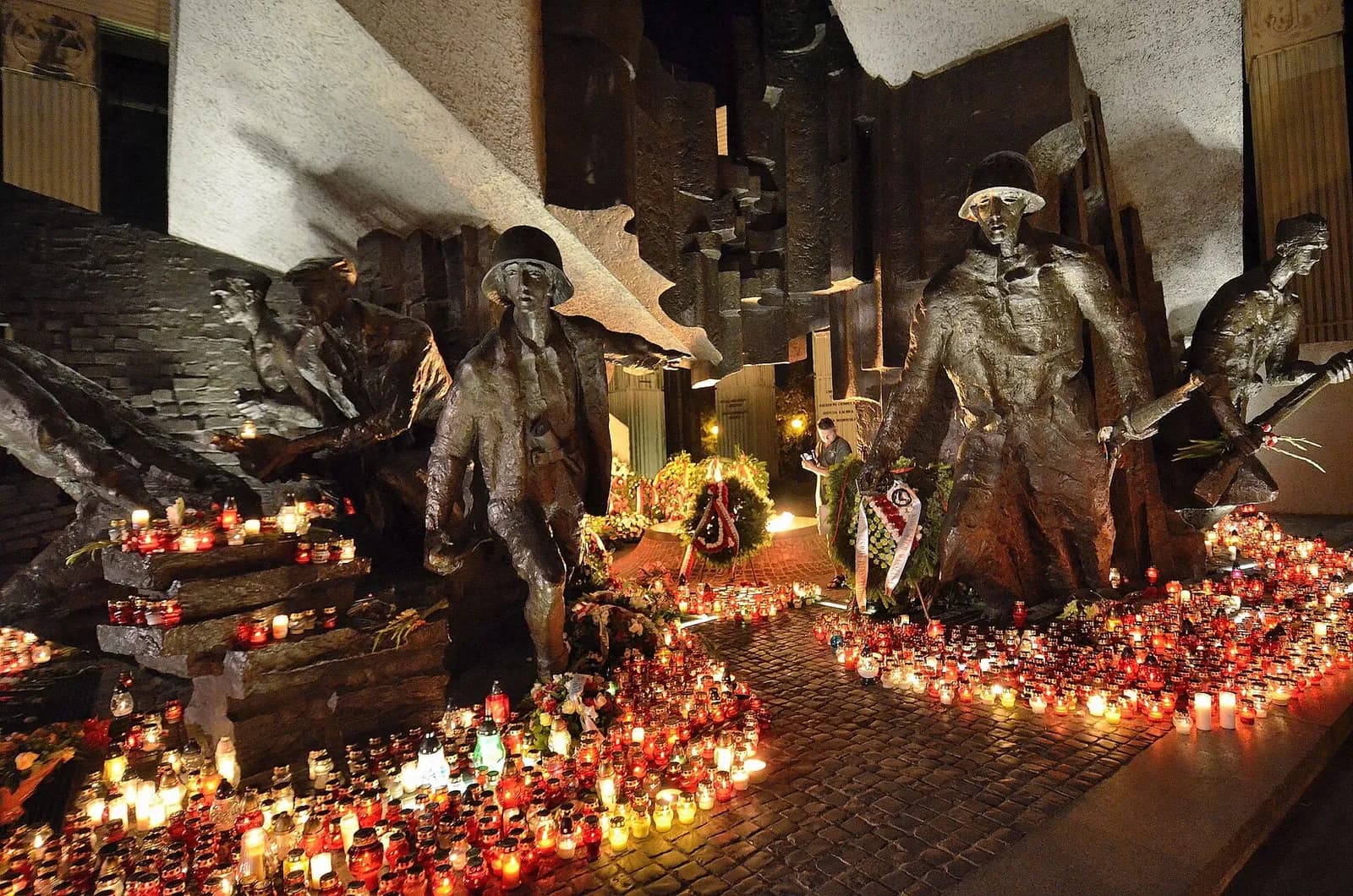
Across the city, memorials are decorated with flowers, Polish flags appear on public buildings, exhibitions open, volunteers prepare ceremonies and residents pause to remember the people whose courage shaped the city that exists today.