A City-Wide Programme of Remembrance
Every year on 1 August, Warsaw pauses to remember the men, women and civilians who took part in the Warsaw Uprising of 1944. The anniversary is not limited to one location. Across districts including Wola, Śródmieście, Mokotów, Żoliborz and Praga, memorials, museums and public spaces become places of reflection.
The programme extends over several days, combining official ceremonies with exhibitions, concerts, historical walks and educational activities. For residents and visitors alike, the anniversary offers many ways to learn about the events of 1944 and take part respectfully.
Before 1 August: Preparing the City for Remembrance
The commemorations traditionally begin before the main anniversary day, with museums, schools and cultural institutions introducing visitors to the history of the uprising.
Events may include temporary exhibitions, outdoor photography displays, documentary screenings, public lectures and district-level remembrance ceremonies. Many outdoor exhibitions remain available throughout August, allowing visitors arriving later in the month to explore the history at their own pace.
1 August: The Main Day of Commemoration
Morning Ceremonies and Memorial Visits
The day begins with official ceremonies at locations connected with the uprising. Veterans, representatives of the armed forces, public officials, scouts and residents gather to lay wreaths and honour those who fought and died.
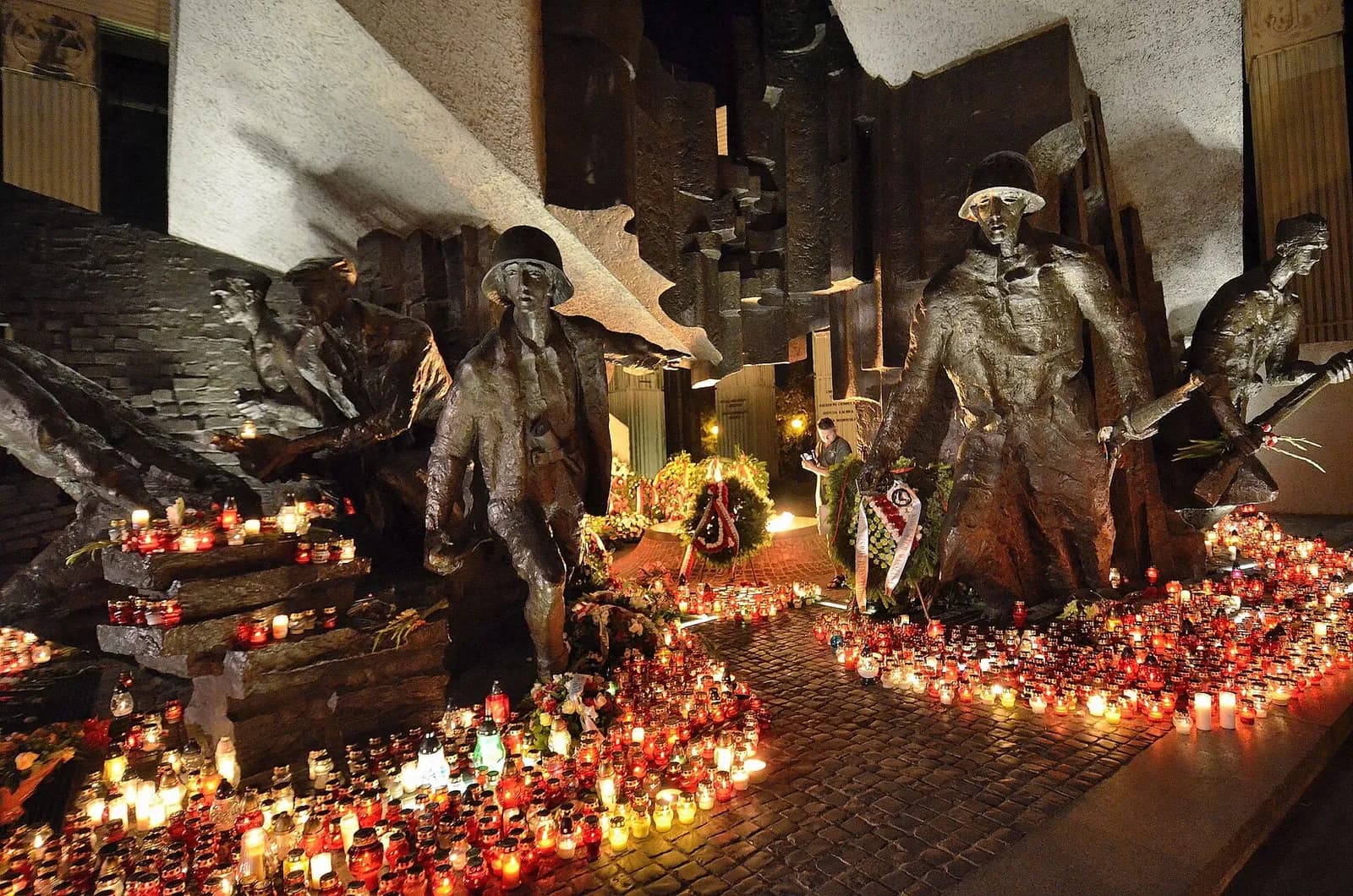
Important sites include the Warsaw Uprising Monument, memorials in Wola and Mokotów, military cemeteries and monuments dedicated to the Polish Underground State and Home Army.
Visitors are welcome at many ceremonies, although large crowds, security measures and temporary traffic restrictions should be expected.
The Warsaw Uprising Museum
The Warsaw Uprising Museum remains one of the central places of remembrance during the anniversary period. Located in a former tram power station, the museum presents the story of the uprising through personal accounts, photographs, documents and multimedia displays.
During the anniversary period, visitors can expect special exhibitions, educational activities, archive film screenings and commemorative installations.
The museum is particularly busy around 1 August, so arriving early or booking tickets in advance is recommended where possible.
Godzina "W": 5.00 pm
At exactly 5.00 pm on 1 August, Warsaw comes to a standstill for Godzina "W", the moment marking the beginning of the uprising.
Sirens sound across the city and, where possible, traffic stops. Cars, trams, buses, cyclists and pedestrians pause for one minute of silence.
Many residents gather at places such as Rondo Dmowskiego, Plac Krasińskich and the Warsaw Uprising Monument, while others simply stop wherever they are.
Visitors do not need to attend an organised ceremony. Standing quietly during the minute of silence is considered a respectful way to join the city in remembrance.
Evening Events and Cultural Programmes
Following the ceremonies, the anniversary continues with cultural events reflecting on wartime Warsaw and its legacy.
Programmes vary each year but may include open-air concerts, military orchestra performances, choir presentations, poetry readings, film screenings and multimedia displays. These events are intended as moments of reflection rather than celebration.
Exploring the Anniversary Through the Week
Historical Walks and Educational Events
Guided walks provide a deeper understanding of the uprising beyond the main monuments. Led by historians and local experts, they often explore insurgent routes, battle locations, wartime hospitals, underground communication networks and the experiences of civilians during the occupation.
Museums, universities, libraries and cultural institutions also organise lectures, discussions, book presentations and archive events for those wishing to explore the history in greater detail.
Family Activities
Many anniversary events are designed for younger generations, including workshops, storytelling sessions, educational games and museum activities. The focus is on helping children understand the personal stories behind the historical events.
Outdoor Exhibitions
Throughout Warsaw, temporary displays often feature historic photographs, personal testimonies, maps, documents and images showing the transformation of the city before and after the war. Many exhibitions include English-language information, making them accessible to international visitors.
Practical Advice for Visitors
The anniversary attracts large crowds, particularly in central Warsaw. A little preparation can make the experience more comfortable.
- Allow extra travel time: Temporary road closures and processions may affect traffic. Public transport is usually the easiest way to move around the city, although some routes may change.
- Arrive early: Popular ceremonies become crowded quickly. Arriving 30 to 60 minutes beforehand is advisable.
- Dress appropriately: There is no formal dress code, but comfortable clothing suitable for outdoor events is recommended.
- Carry water: August temperatures can be high, especially during long outdoor ceremonies.
How to Take Part Respectfully
For many visitors, experiencing the Warsaw Uprising anniversary is a powerful introduction to the city’s history. Following the example of residents is the best guide.
During Godzina "W", remove headphones, pause conversations and stand quietly for the duration of the silence if it is safe to do so.
At memorials, visitors should speak quietly, respect ceremonial areas and avoid climbing on monuments. Photography is generally accepted in public spaces, but close-up photographs of veterans should only be taken with permission, and flash photography should be avoided during ceremonies.
Understanding the Kotwica Symbol
One of the most recognisable symbols seen during the anniversary is the Polska Walcząca emblem, commonly known as the Kotwica or "Anchor".
Created in 1942 by Anna Smoleńska, a member of the underground resistance, the symbol combines the letters "P" and "W", representing Polska Walcząca ("Fighting Poland"). During the Second World War, members of the Polish Underground State painted the symbol across occupied Warsaw as an act of resistance and a sign that the underground movement remained active.
Today, the Kotwica appears on flags, banners, clothing, commemorative items and floral tributes during the anniversary. For many Poles, it represents courage, sacrifice and the defence of freedom. Visitors should understand it as a historical symbol of remembrance rather than simply a decorative image.
Why the Anniversary Matters Beyond Poland
The Warsaw Uprising remains one of Europe's most significant acts of resistance against Nazi occupation. Its legacy reaches beyond Polish history, raising questions about the human cost of war, civilian resilience and the importance of preserving historical memory.
For Warsaw, the anniversary is also closely connected with the story of reconstruction. After the destruction of 1944, much of the city was rebuilt almost entirely. Today’s capital reflects both the devastation of the past and the determination of generations who restored its cultural identity.
A Moment to Reflect
The Warsaw Uprising anniversary is one of the most meaningful dates in the city’s calendar. It is not a festival, but a living expression of memory shared by residents and visitors alike.
Whether you attend a ceremony, visit the Warsaw Rising Museum, join a historical walk or simply pause during Godzina "W", taking time to reflect helps honour the people whose experiences continue to shape Warsaw more than eight decades later.
image credit: Adrian Grycuk, CC BY-SA 3.0 pl