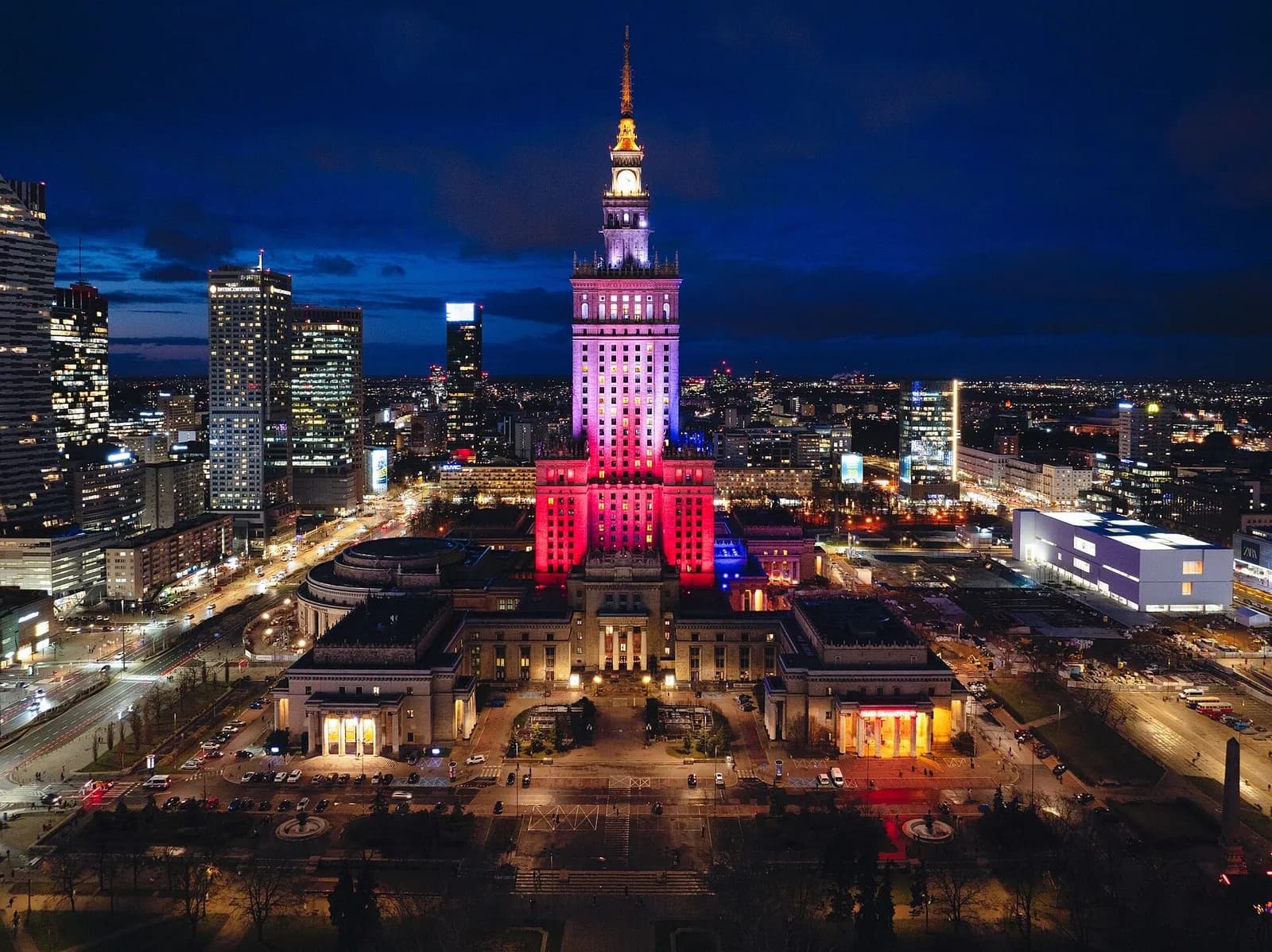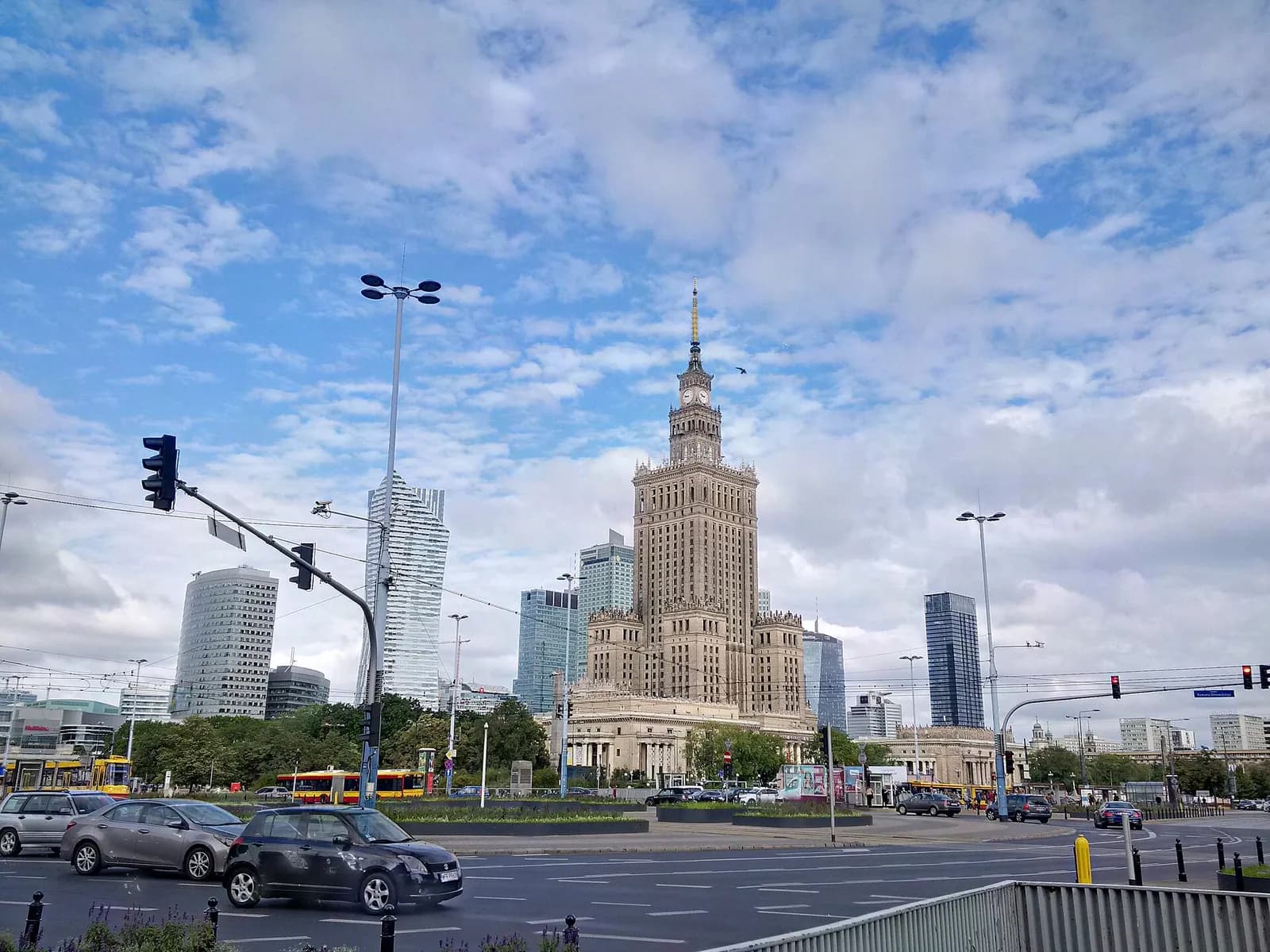
There are few places in Warsaw where the Palace of Culture and Science is out of sight. Whether arriving by train at Warszawa Centralna, strolling along Marszałkowska or enjoying a coffee in one of the city's modern high-rise offices, the building is never far from view. Rising above the capital at 237 metres, its distinctive silhouette has watched over Warsaw for more than seventy years, becoming one of the most recognised landmarks in Poland.
For visitors, it is often the first building they seek out. For residents, it is simply part of the city's everyday landscape. Yet behind its familiar façade lies one of the most fascinating and complex stories in modern Polish history.
Built for a Different Warsaw
When construction began in 1952, Warsaw was still rebuilding after the devastation of the Second World War. Much of the city had been reduced to ruins, and vast areas around today's city centre looked very different from the streets visitors see today.
The Palace of Culture and Science was presented as a gift from the Soviet Union to the Polish people, intended to symbolise friendship between the two nations. Designed by Soviet architect Lev Rudnev, the project reflected the monumental Socialist Realist style favoured by Moscow at the time. Before drawing up his plans, Rudnev travelled across Poland, taking inspiration from the architecture of cities such as Kraków, Toruń and Zamość, weaving elements of the Polish Renaissance into the final design.
Completed in 1955, the building originally bore the name of Joseph Stalin. That association disappeared during the political changes that followed, but the Palace itself remained, gradually becoming a part of everyday life in Warsaw.
A City That Grew Around Its Tallest Building
For decades, the Palace dominated Warsaw's skyline. Long before glass office towers transformed the city centre, its spire could be seen from almost every district, serving as a familiar point of reference for generations of residents.
Today, the view tells a different story. Modern skyscrapers surround the Palace on all sides, reflecting Warsaw's remarkable transformation into one of Central Europe's fastest-growing business capitals. Rather than diminishing its presence, this changing skyline has given the building a new role, standing between the city's post-war past and its contemporary future.
The contrast is perhaps nowhere more striking than in Plac Defilad itself, where new cultural institutions, public spaces and commercial developments continue to reshape the heart of the capital.
More Than a Landmark
Despite its origins, the Palace has long since become far more than a political monument.
Behind its stone façade are theatres, cinemas, museums, exhibition halls, university facilities, offices, restaurants and cafés. On any given day, school groups explore exhibitions, concertgoers gather beneath its grand interiors, business delegates attend conferences and tourists queue for the lift to the observation terrace.
This constant flow of activity has helped redefine the building over the decades. For many Warsaw residents, the Palace is simply a place to meet friends, attend a performance or enjoy one of the city's best panoramic views.
Looking Across a Changing Capital
The observation terrace on the 30th floor remains one of Warsaw's most popular viewpoints, offering a perspective that reveals just how dramatically the city has evolved.
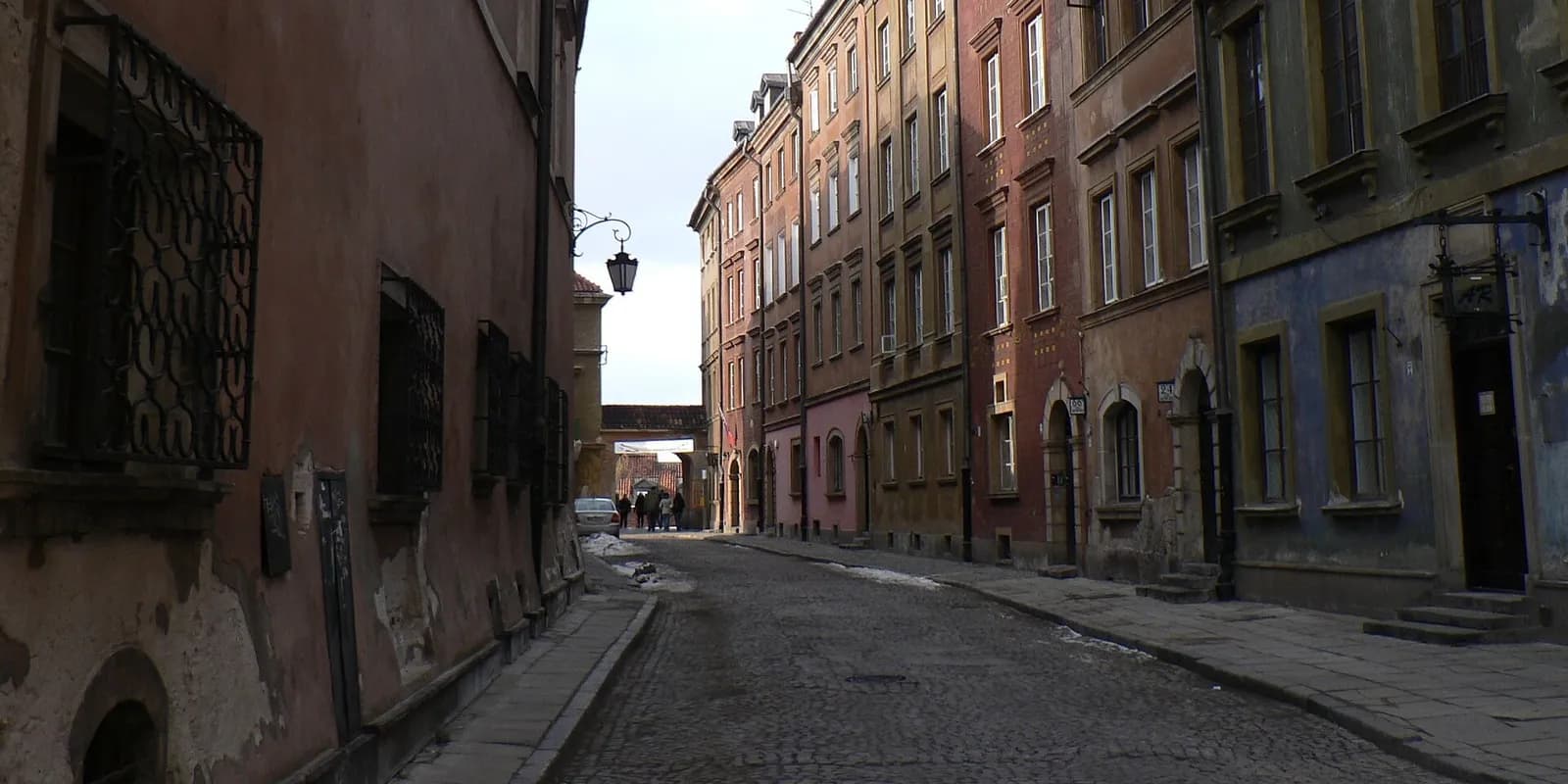
To the north lies the carefully reconstructed Old Town, a testament to Warsaw's post-war determination. To the east, the Vistula winds through the city towards the National Stadium. Looking west and south, clusters of contemporary skyscrapers rise where open spaces once surrounded the Palace, illustrating the pace at which the capital has developed over recent decades.
It is a view that tells the story of Warsaw as clearly as any museum exhibition.
A Building That Still Sparks Conversation
Few buildings in Poland provoke such varied opinions.
For some, the Palace remains an uncomfortable reminder of the Soviet influence that shaped much of the country's post-war history. Others see it as an important piece of architectural heritage whose meaning has changed with time. While its origins cannot be separated from the political circumstances in which it was built, its place in modern Warsaw has evolved considerably.
Today, countless cultural events take place within its walls each year, drawing audiences from across Poland and beyond. Generations who never experienced communist rule know the building primarily as a venue for concerts, exhibitions, festivals and family days out.
That changing relationship perhaps says as much about Warsaw itself as it does about the Palace.
The Heart of Modern Warsaw
Cities are constantly rewriting their own stories, and few places illustrate that better than the Palace of Culture and Science. Once intended to represent political power, it has become a shared civic space at the centre of one of Europe's most dynamic capitals.
Whether admired for its architecture, appreciated for its cultural programme or simply used as a meeting point beneath its towering clock, the Palace remains woven into daily life in Warsaw. Love it or dislike it, it is impossible to imagine the city without it.
Source: pkin.pl
image credit: Frunze103, Wikimedia Commons, public domain